Best Espresso Machines Under $200 for Beginners (2026)
Disclosure: As an Amazon Associate I earn from qualifying purchases. Prices change often — use the buttons below to see the current price on Amazon. Read our affiliate disclosure and how we pick products.
Buying your first espresso machine on a budget? This is where real pump machines with portafilters and steam wands start, and owners consistently report genuinely enjoyable lattes and cappuccinos once the basics click. The trade-offs are predictable: pressurized baskets, more plastic in the build, and milk frothing that takes practice. Below are seven beginner-friendly options — six pump machines and one manual lever press — compared from manufacturer specifications and owner-review patterns.
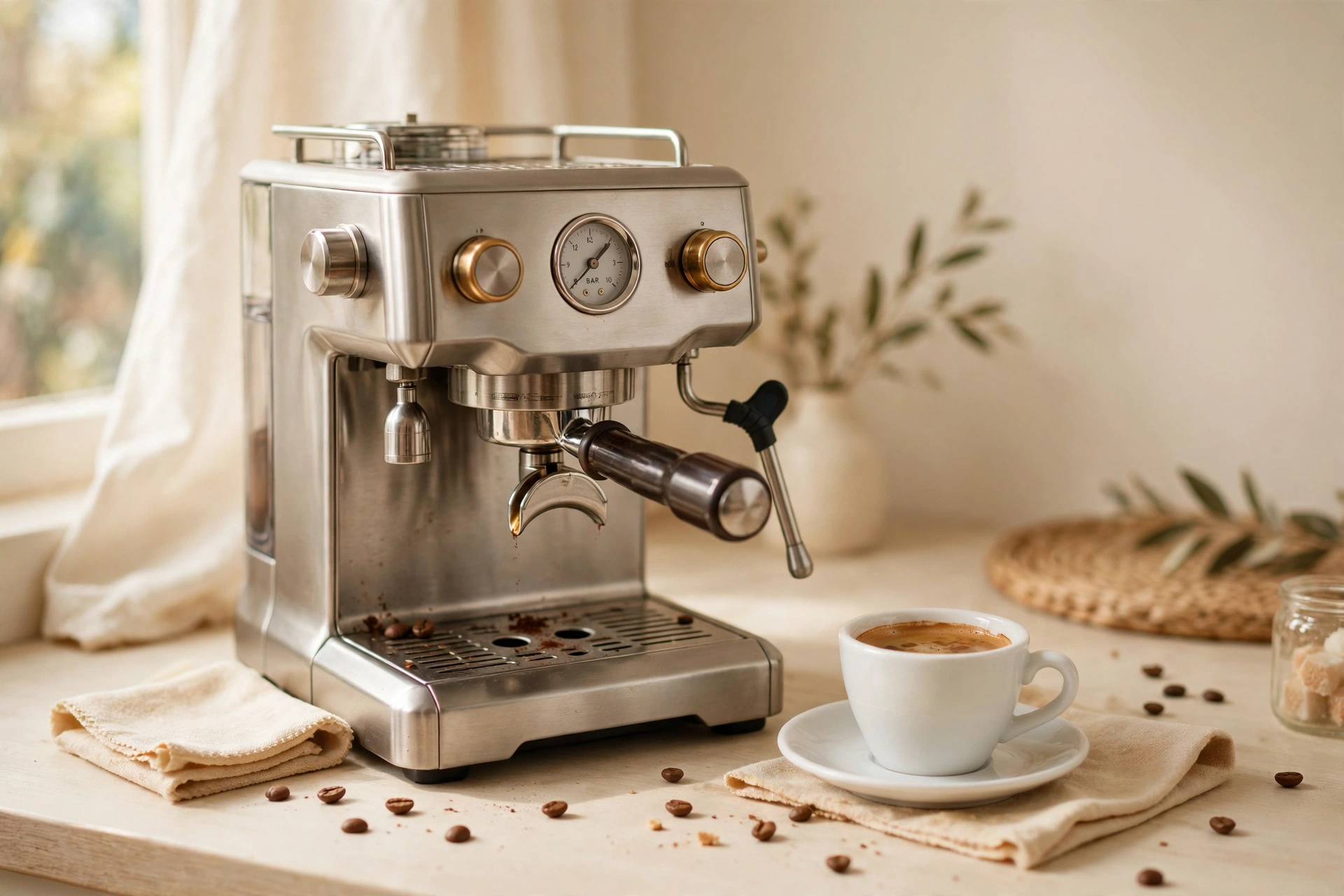
De’Longhi Stilosa EC260
Our Best Overall pick for beginners
-
Pump: 15 bar, stainless steel boiler -
Baskets: ~51mm pressurized, ESE pod compatible -
Milk: manual steam wand (Panarello-style) -
Water tank: 33.8 fl oz, removable
Our Quick Picks
- Best Overall: De’Longhi Stilosa EC260 — the consensus beginner pick.
- Best Budget (Most Features for the Money): Casabrews CM5418 — stainless body, pressure gauge, temperature control.
- Best Compact: De’Longhi Dedica EC685 — about 6 inches wide, made for small kitchens.
- Best Shot Quality: Flair Classic — reviewers rate its espresso highest here.
- Best One-Touch Milk Drinks: Mr. Coffee Café Barista — press a button, get a latte.
The 7 Best Espresso Machines Under $200 for Beginners
1. De’Longhi Stilosa EC260 Best Overall
The Stilosa is the machine most beginner guides land on: 4.2 stars across more than 13,800 Amazon ratings. It is a simple manual machine — 15-bar pump, stainless steel boiler, dial controls, and pressurized baskets that create resistance themselves, so pre-ground supermarket coffee still produces a shot with crema while you learn. Owners who stick with it report years of good drinks, though the plastic control knob draws consistent complaints.
Who it is for: First-time buyers starting with pre-ground coffee.
Pros
- Forgiving baskets work with pre-ground coffee
- Huge owner base with many multi-year reports
- Simple dial controls; compact
Cons
- Plastic control knob is a recurring failure point
- Pressurized baskets cap shot quality
- Flimsy tamper; limited tall-mug clearance
| Pump | 15 bar; stainless steel boiler |
|---|---|
| Portafilter | ~51mm, pressurized single/double baskets; ESE pod compatible |
| Milk | Manual steam wand (Panarello-style) |
| Water tank | 33.8 fl oz, removable |
| Size | About 8 in wide × 13.5 in deep × 11.2 in tall; 9.5 lb; 1-year warranty |
2. Casabrews CM5418 Best Budget
The CM5418 is one of Amazon’s best-selling espresso machines: 4.3 stars across more than 8,400 ratings. On paper it out-specs most rivals here — a 20-bar rated pump, PID temperature control and low-pressure pre-infusion (brand-listed), a pressure gauge, and a brushed stainless steel body where competitors use plastic, all about 6 inches wide. Owners praise the espresso quality, crema, and looks. The catch is reliability: about one in ten ratings are one star, with early breakdowns a recurring theme. As a single-boiler machine, it must also cool down after steaming before brewing again.
Who it is for: Budget buyers who want maximum features and accept a reliability gamble.
Pros
- Stainless body and pressure gauge at an entry-level price
- Owners consistently praise taste and crema
- Very compact; multiple colors; fast warm-up
Cons
- Reliability is the top complaint in critical reviews
- Must cool down after steaming before the next shot
- No milk pitcher included
| Pump | 20 bar rated; 1,350W; PID temperature control (brand-listed) |
|---|---|
| Portafilter | 51mm, pressurized dual-wall baskets (1-cup and 2-cup) |
| Milk | Manual steam wand; hot water via wand |
| Extras | Pressure gauge, cup warming tray |
| Water tank | 34 oz, removable |
| Size | 5.9 in wide × 12 in deep × 12.3 in tall; about 8.6 lb; 1-year warranty |
3. De’Longhi Dedica EC685 Best Compact
The Dedica is De’Longhi’s slimmest pump machine at roughly 6 inches wide — the default pick when counter space is the constraint. A thermoblock heater reaches brewing temperature in about 35–40 seconds, and the pressurized baskets work with ground coffee or E.S.E. pods. The frothing wand adjusts between two settings, and the drip tray lifts out for taller cups. Amazon’s customer summary highlights ease of use and the frother. Reviewers are more measured on shot quality: the baskets forgive mistakes but cap flavor, and the Panarello-style wand makes true latte-art microfoam difficult.
Who it is for: Small-kitchen buyers who mostly drink milk-based drinks.
Pros
- Slimmest pump machine in this guide
- Fast heat-up; programmable shots
- Forgiving with pre-ground coffee and pods
- Owners particularly praise the frother
Cons
- Pressurized baskets limit flavor and control
- Wand struggles with silky microfoam
- Shots can run cool at default settings
- Small drip tray; mostly plastic build
| Pump | 15 bar; thermoblock heating, fast warm-up |
|---|---|
| Portafilter | 51mm, pressurized baskets (single, double, E.S.E. pod) |
| Milk | Adjustable manual frothing wand, two settings |
| Water tank | 37 fl oz (1.1 L), removable |
| Extras | Programmable shot volumes, cup warmer, auto-off, descaling alarm |
| Size | About 5.9 in wide × 13 in deep × 12 in tall; 9.3 lb; 1-year warranty |
4. De’Longhi Linea Classic Best Presets & Big Tank
The Linea Classic is De’Longhi’s newest beginner machine (2025), with positive early Amazon ratings — 4.4 stars from 153 ratings. It pairs a 15-bar pump and thermoblock heating with a pressure gauge, customizable shot presets, and the largest water tank here at 57.5 fl oz. Reviewers call it attractive, compact, and very easy to use. The compromises show in the cup: dual-wall pressurized baskets limit nuance, and one major reviewer found the steam wand effectively incapable of true microfoam.
Who it is for: Beginners who value looks, presets, and a big tank.
Pros
- Sleek stainless design; beginner-friendly presets
- Largest water tank in this guide
- Pressure gauge helps learning; compact
Cons
- Steam wand cannot produce proper microfoam, per reviewers
- Pressurized baskets only; shots can run fast and thin
- Small early rating pool; plastic tamper
| Pump | 15 bar; thermoblock with temperature control |
|---|---|
| Portafilter | 51mm, dual-wall pressurized baskets |
| Milk | Adjustable two-setting steam wand |
| Extras | Visual pressure gauge, customizable shot presets, adjustable drip tray |
| Water tank | 57.5 fl oz (1.7 L), removable |
| Size | 8.9 in wide × 11.1 in deep × 12 in tall; 9 lb; 1-year warranty |
5. Flair Classic Best Shot Quality
The Flair Classic is not a machine at all — it is a manual lever press with no pump or electricity. You add hot water from a kettle to its 60ml cylinder and pull the lever yourself, generating the 6–9 bar espresso needs. The Amazon version includes a pressure gauge, stainless steel tamper, two portafilters, and a travel case. It holds about 4.5 stars across roughly 1,500 ratings. Reviewers consistently rate its espresso quality the highest in this group, because you control pressure and temperature directly. Trade-offs: a steep learning curve, small 12–18g doses, no milk steaming, and a capable burr grinder is essential.
Who it is for: Beginners focused on straight espresso quality.
Pros
- Highest espresso-quality ceiling in this guide
- Full manual control, including pre-infusion
- Portable, silent, nothing electronic to fail
- Easy to clean; durable metal build
Cons
- Steep learning curve; needs kettle plus a good burr grinder
- No milk steaming; small shots only
- Many small parts; preheating required
| Type | Manual lever press; user-generated 6–9 bar pressure |
|---|---|
| Portafilter | 40mm; bottomless 2-in-1 and flow-control portafilters |
| Dose / water | 12–18g coffee; 60ml cylinder, about 40ml yield |
| Milk | None — requires a separate frother |
| Extras | Pressure gauge, stainless tamper, travel case |
| Size | About 14 × 10 × 4 in assembled; packs into case; 5 lb; 3-year warranty |
6. Mr. Coffee Café Barista Best One-Touch Milk Drinks
The Café Barista is built for people who want lattes without learning barista technique. Its 15-bar pump brews through pressurized 51mm baskets while an automatic frother draws milk from a removable reservoir, heats and foams it, and pours it into the cup — one button press per drink. The milk reservoir stores in the fridge between uses. It carries 4.3 stars across more than 14,000 reviews. Reviewers agree on the trade-off: convenience is excellent, quality is acceptable rather than great — straight espresso is just okay, foam is airy rather than silky, and the milk system needs cleaning after every use.
Who it is for: Milk-drink fans who want zero learning curve.
Pros
- True one-touch milk drinks, no skill required
- Milk reservoir stores in the fridge
- Adjustable cup tray; built-in frother cleaning cycle
Cons
- Espresso quality and foam texture are only average
- Inconsistent brew temperature between shots
- Mostly plastic build; milk system needs cleaning after each use
| Pump | 15 bar; 1,040W |
|---|---|
| Portafilter | 51mm, pressurized single and double baskets |
| Milk | Automatic frother with froth-level control; removable milk reservoir |
| Controls | One-touch espresso, cappuccino, and latte buttons (single/double) |
| Water tank | Removable |
| Size | 11.2 in wide × 8.9 in deep × 12.6 in tall; 10.4 lb; 1-year warranty |
7. Breville Bambino (BES450) Best Pump Machine on Sale
A budget note first: the Bambino usually sits above this price range and only fits when discounted, so check the current price. When it does fit, it is the most capable pump machine here. The ThermoJet heater is ready in about 3 seconds, PID temperature control keeps brewing stable, and low-pressure pre-infusion leads into a 9-bar extraction. It includes both pressurized dual-wall baskets for starting out and single-wall baskets for later — a real upgrade path the others lack — and its manual steam wand is widely praised as good enough for latte art. It holds 4.0 stars across more than 2,600 Amazon ratings. Owners love the speed and milk quality; the recurring complaint is durability, with some units failing within months.
Who it is for: Beginners willing to wait for a sale for better temperature control.
Pros
- Fastest heat-up here; stable PID temperature
- Includes non-pressurized baskets for real technique
- Steam wand capable of latte-art milk; narrow footprint
Cons
- Usually priced above this budget — only fits on sale
- Durability complaints in a share of reviews
- Small drip tray; light body can shift during use
- Needs a separate espresso grinder for best results
| Heating | ThermoJet, ready in about 3 seconds; PID temperature control |
|---|---|
| Pump | 15-bar Italian pump with 9-bar extraction and pre-infusion |
| Portafilter | 54mm, ~18–19g dose; single-wall and dual-wall baskets |
| Milk | Manual steam wand; dedicated hot water button |
| Water tank | 47 fl oz, removable |
| Size | 6.3 in wide × 13.7 in deep × 12 in tall; 10.9 lb; 1-year limited warranty |
Frequently Asked Questions
Q Can a beginner make genuinely good espresso in this budget?
Q Do I need to buy a grinder right away?
Q Is a 20-bar pump better than a 15-bar pump?
Q Which machine is best if I mostly drink lattes?
Q How long do budget espresso machines last?
Q Is the Breville Bambino worth stretching the budget for?
Conclusion
For most beginners, the De’Longhi Stilosa EC260 is the safest first step: forgiving baskets, simple controls, and the largest owner base in this guide. Choose the Casabrews CM5418 if features and looks matter most, the Dedica EC685 if your counter is tiny, the Mr. Coffee Café Barista for one-touch lattes, and the Flair Classic or a discounted Breville Bambino if shot quality is your priority.
Whichever you pick, fresh coffee and a week of practice will do more for your cup than any specification. Explore more picks in our Coffee & Drinks hub, and see how we pick products.
*Disclosure: As an Amazon Associate I earn from qualifying purchases. KitchNest picks are research-based — we compare ratings, owner reviews and specifications, and say so openly. Read our Affiliate Disclosure.